Deafened by the Return Flight: Notes on Coming Home to a Country That Won't Stop Talking
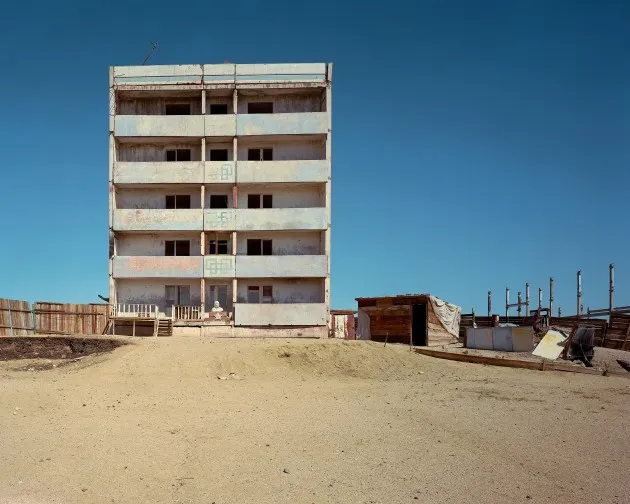
Photo: StaPerRa, CC BY-SA 3.0, via Wikimedia Commons
There's a moment on every flight home from Ulaanbaatar that I've come to dread. Somewhere over the Pacific, the cabin noise stops registering as background and becomes the whole world. By the time I clear customs in Seattle or San Francisco, my ears are ringing and my nerves are shot — not from jet lag, but from reentry.
It took me three trips to figure out what was happening. It wasn't the plane. It was everything waiting on the other side of it.
The Steppe Doesn't Have a Soundtrack
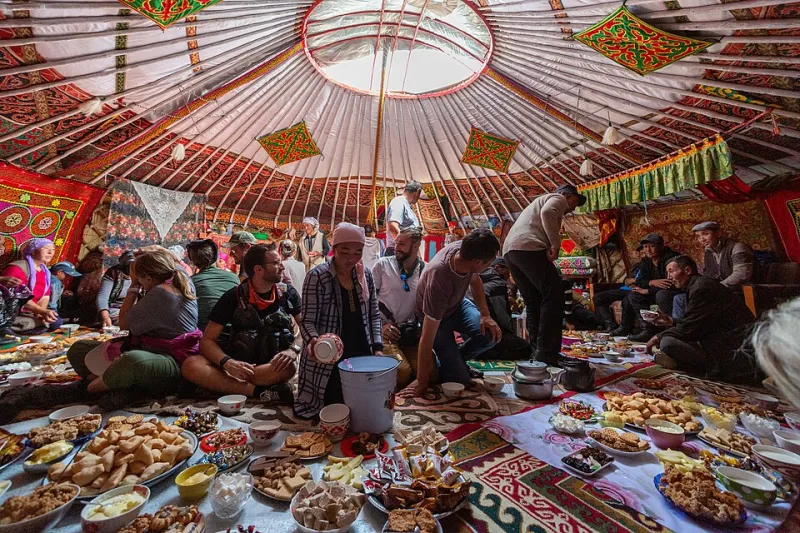
Spend enough nights in a ger out in Khentii or the middle Gobi and you'll notice something strange happening to your hearing. With no engine hum, no refrigerator, no HVAC, no neighbor's TV bleeding through drywall, your ears recalibrate. Suddenly you can hear a horse chewing from two hundred meters away. You can hear the felt walls of the ger breathe when the wind finds them.
The quiet out there isn't peaceful in the postcard sense. It's total. Days pass without a single sound that wasn't made by an animal, weather, or a person choosing to speak. I once sat outside a herder's camp at dawn and realized the loudest thing in any direction was a lark. That's not an exaggeration for effect — I genuinely could not identify a second sound.
You don't appreciate how rare that is until you lose it.
America Is One Long notification Chime
Back home, the noise isn't one thing. It's the stacking. The refrigerator kicks on. The dishwasher. A leaf blower three houses down. My phone buzzes with a delivery update for a package I forgot I ordered. The TV autoplays something I didn't choose. A car idles in the driveway with the radio going.
Individually, none of it registers. Stacked, it forms a kind of constant low-grade drone that I'm convinced is doing something to us. Americans spend real money trying to escape it — noise-canceling headphones, white noise machines (we've reached the point where we buy machines to make fake quiet), cabin rentals in the Adirondacks, meditation apps with rainfall loops. We've turned silence into a subscription service.
Here's the thing that gets me: on the steppe, silence is free, and nobody there thinks of it as a product. It's just Tuesday.
What Quiet Actually Costs
I did the math on my last trip. Getting to genuine acoustic emptiness from a US city runs you a flight to UB, a domestic hop or a long drive, and then days by vehicle past the last power line. Call it $2,500 and two weeks of your life, each way. That's the sticker price of real quiet in 2024.
Compare that to the herding family I stay with outside Lun. For them, silence isn't an amenity. It's the default condition of a life without surplus. And I've noticed they're not serene in the way a spa brochure imagines. They're just uninterrupted. Conversations happen at full length. Nobody checks anything. When a visitor arrives, the arrival is the event — not one of forty notifications.
That, I think, is what travelers are actually chasing when they say they want to 'get away from it all.' Not scenery. Not even solitude. Uninterruptedness. The rare experience of being one person's full attention for more than ninety seconds.
I Can't Fix Your Suburbs, But Here's What I Do Now
I'm not going to pretend I moved to the countryside and sold my iPhone. I still live in a noisy country and I mostly like it here. But the steppe changed my habits in small, stubborn ways:
- I stopped sleeping with my phone in the room. The herders don't have this problem; I decided I didn't have to either.
- I drive with the radio off for the first twenty minutes of any trip. It's amazing what your own thoughts sound like when you let them start.
- I eat one meal a day without a screen, ideally outside. On the steppe, every meal is like this. It costs nothing to steal one back.
- I've started noticing noise the way I notice light — as something with texture and quality, not just volume.
None of this is profound. But it's the honest version of what people mean when they come back from Mongolia and say 'it changed me.' It didn't change me. It just showed me the volume knob, and where I'd been letting it sit.
The steppe will outlast all of us, quiet as ever. The question is whether any of us can hear it — or afford the trip back to ourselves once we've left.