Four Moves a Year, One Duffel: What a Nomad Family Taught Me About My Camera Bag
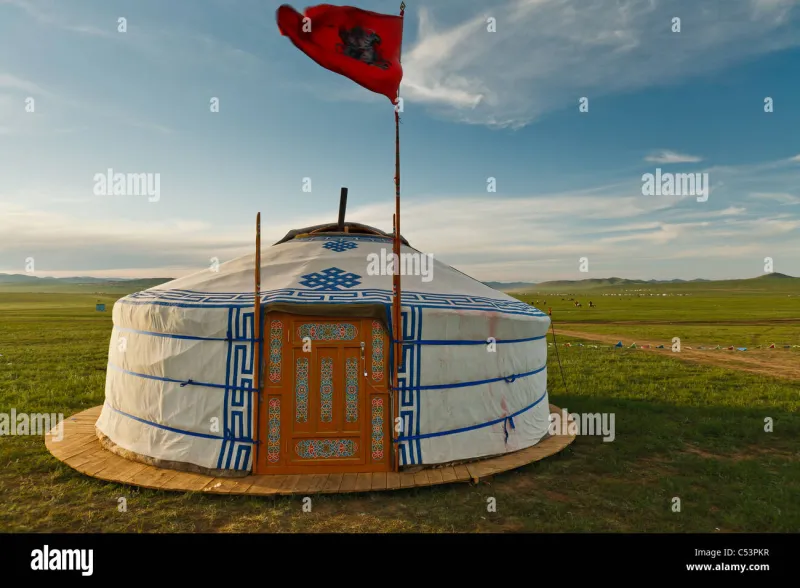
Photo: nomad family loading ger felt walls onto truck Mongolian steppe moving day, via c8.alamy.com
The Truck Shows Up in an Hour
When the herding family I'd been staying with decided to move to their summer pasture, nobody panicked. Nobody made a spreadsheet. The truck was coming sometime in the morning, and when it rattled up the track, the whole ger came down in under ninety minutes.
The lattice walls folded like an accordion. The felt covering rolled up. The stove pipes came apart in three pieces. The altar cloth, the family photos, the kettle — everything else fit into a stack of trunks, sacks, and one rolled carpet. Their entire domestic life went onto a flatbed smaller than the one my neighbor in Portland uses for mulch.
I stood there with two camera bodies, four lenses, a drone, a laptop, a drone controller, a battery bank the size of a brick, and a duffel I could not have carried a mile. I know because I tried.
Owning Your Home vs. Your Home Owning You
Here's what got under my skin. It wasn't that they had less. It's that everything they owned had to justify itself four times a year. If it didn't earn its spot on the truck, it didn't come. There's no storage unit outside the ger. No garage. No junk drawer where the mediocre stuff goes to hide.
American households average something like 300,000 items. I didn't count mine — I was afraid to — but I did count my camera bag before this trip, on the theory that a packing list would make me feel organized. It did not. Fourteen items, and I could tell you honestly what I'd used on my last three trips: maybe five of them.
The rest was insurance against imaginary situations. The third backup battery for a drone I'd flown twice. The lens I bought because a YouTube review said I'd regret not having it. I had, essentially, a storage unit with a strap.
The Question the Truck Asks
Watching that family pack, I realized they operate with a filter most of us never install: does this thing earn the space it takes? Not "is it nice?" Not "might I need it?" Not "was it expensive?"
Space is the currency out there. Every cubic foot on the truck is a cubic foot that can't carry the water barrel, the spare tire, the kid's bicycle. Stuff competes with stuff, and only the useful survives.
Back home, space feels free, so nothing competes. That's the trap. When space costs nothing, everything stays — and the everything gets heavy even when it never moves. I've carried the weight of gear I never unpacked across three states and two continents.
A Packing List, If You Want One
I came home and did what any recovering gear addict does: I made rules. Steal them if they help.
The one-season test. Nomads move four times a year. I decided anything I hadn't used in four months of ordinary life goes in a box in the closet. If the box goes unopened for a season, it gets donated. No exceptions for "sentimental" — the photos of the sentimental stuff count.
One bag, real trip. For my next assignment, one camera body, two lenses, and whatever fits in the same duffel as my clothes. If it doesn't fit, it doesn't come. I've already had two small crises about this and expect to have more.
Buy the second one later. Backup gear is a story we tell ourselves. The family on the steppe carries one stove, one kettle, one good knife. If it breaks, they fix it or borrow one from the nearest ger — which is never more than a few miles away, and the neighbor always says yes. My backup plan, it turns out, has always been other people. Same as theirs.
Let the space pay rent. The empty shelf, the empty pocket, the empty slot in the bag — that's not waste. That's room for the thing you'll actually need, or for nothing at all, which is underrated.
What I Left Out
I want to be honest: this isn't a poverty story, and I'm not romanticizing hardship. Winter out there is brutal, and the families I know work enormously hard for what they have. Their minimalism isn't an aesthetic. It's a survival technology refined over centuries, and it works.
But there's a freedom in it I felt physically, watching that truck pull away with everything they own and nothing they don't. The kids were already racing ahead on horseback. The dog followed the truck. Nobody looked back at the old campsite.
I looked back at my duffel. It was still too heavy. But I took out the drone that night, and mailed it home from Moron, and I have not missed it once.