Clockwise, Kombucha of the Steppe, and Other Ger Rules I Learned the Hard Way
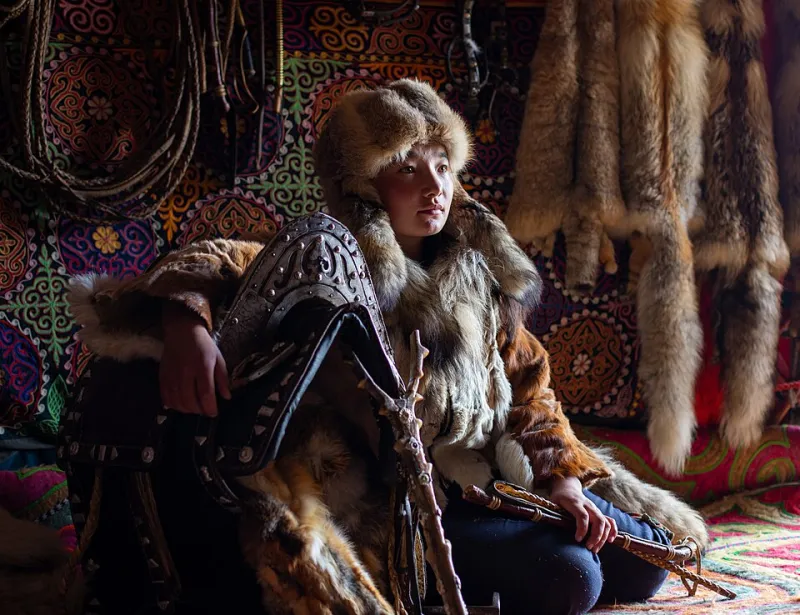
Photo: Bfreeproductions, CC BY-SA 4.0, via Wikimedia Commons
The first time I crossed a threshold into a Mongolian ger, I did it like an American: fast, distracted, thinking about my camera bag. The herder's wife gave me a look I've since learned to read perfectly — not angry, just quietly amused, the way you'd look at a golden retriever trying to open a screen door.
I'd walked on the threshold. Apparently, that's a thing you don't do.
It took me three trips and more than a few awkward silences to understand that ger etiquette isn't a list of arbitrary rules. It's a system, refined over centuries of living in one of the least forgiving climates on earth, where hospitality isn't politeness — it's survival infrastructure. Here's what I wish someone had told me before my first homestay.
The Door Has Directions
In a traditional ger, everything is oriented. The door faces south. The eastern side belongs to the woman of the household; the western side to the man. Guests are seated on the khoimor — the honor area directly across from the door, farthest from the entrance and the draft it carries.
The threshold itself is considered the dwelling's "neck." Stepping on it is disrespectful, and in older traditions, stepping on it while carrying a weapon was grounds for serious trouble. So: step over, never on, and move clockwise once you're inside. Everything in a ger happens in a clockwise direction — passing objects, greeting people, settling in. It mirrors the movement of the sun, and once you notice it, you'll see it everywhere.
My advice for Americans? Slow down at the doorway. We're a culture that barges into Airbnbs dropping our bags by the door. The ger asks for a beat of intentionality first. Say sain baina uu as you enter, even if your pronunciation is rough. The effort lands.
Where You Sit Is a Statement
Don't wander. Don't plop down wherever there's a cushion. Wait to be directed, or take the seat offered — usually the honor spot. If you're traveling with a guide (and for a first trip, you should be), let them handle the choreography and follow their lead.
A few things I learned by trial and error:
- Don't point your feet at anyone, and especially not at the stove. The feet are the lowest part of the body; pointing them at the hearth or a person reads as rude.
- The stove — zuul — is sacred. It's the heart of the home, the warmth that keeps everyone alive at minus thirty. Don't lean on it, don't toss trash in it, and never step over it.
- Whistling indoors is considered bad luck. I have no idea why. I just stopped.
The Offered Bowl Is Never Just a Bowl
Here's where most Westerners fumble, and I include my former self.
You will be offered tea — suutei tsai, salty milk tea — almost before you've sat down. Take it. Even a sip. Refusing outright reads as a rejection of the household's goodwill, and it costs you nothing to accept. Hold the bowl with both hands or with your right hand while supporting your right elbow with your left. It feels formal. It is formal. That's the point.
Then comes the airag: fermented mare's milk, mildly alcoholic, sharply sour, and utterly unlike anything in an American grocery store. It tastes like a cross between kefir, white wine, and a barn. It is also, culturally, a big deal.
Refusing airag outright is genuinely complicated. The polite move is to accept the bowl, take at least a sip or make a token gesture toward your lips, and return it. If you truly can't or won't drink it — pregnancy, medication, plain revulsion — accept the bowl, touch it to your lips, and offer a brief, honest excuse. Nobody expects you to love it. They expect you to honor the gesture.
I've watched American travelers turn down airag with a wrinkled nose and a "no thanks, I'm good," and I've watched the temperature in a ger drop ten degrees. Same refusal, delivered with a smile and both hands? Completely different outcome. It's not about the milk. It's about the respect.
Gifts, Photos, and Knowing When to Leave
Bring something small when visiting: candy for the kids, tea, a practical item. It's not mandatory, but it's noticed. And when food is offered — dried curds, biscuits, whatever's on the table — try a little of everything.
Photography is its own etiquette chapter. Always ask before pointing your lens at anyone, and be prepared for the answer to be no. Some of my favorite frames from years of shooting on the steppe came from visits where I put the camera away entirely and let the relationship come first. The ger isn't a backdrop. It's someone's home.
And when it's time to go, don't just stand up and bolt. There's a farewell rhythm — often another round of tea, a slower exit. In nomadic culture, departure is its own ritual. Rushing it is like leaving a dinner party in the middle of dessert.
Why Any of This Matters
You could visit Mongolia and treat every ger like a novelty Airbnb. You'd survive. But you'd miss the whole point of a homestay-based trip — which is that you're not a customer, you're a guest, and those are different jobs with different responsibilities.
The rules aren't there to trip you up. They're there because a hundred generations of herders figured out how to make strangers into guests in under five minutes, in a place where any stranger might someday need to be a friend. Learn the clockwise turn, hold the bowl with both hands, sip the airag.
You'll get it wrong at least once anyway. I certainly did. But get it mostly right, and the door — the one you didn't step on — stays open.