Saddle Up Late: What Mongolia Taught Me About Learning to Ride at Forty-Three
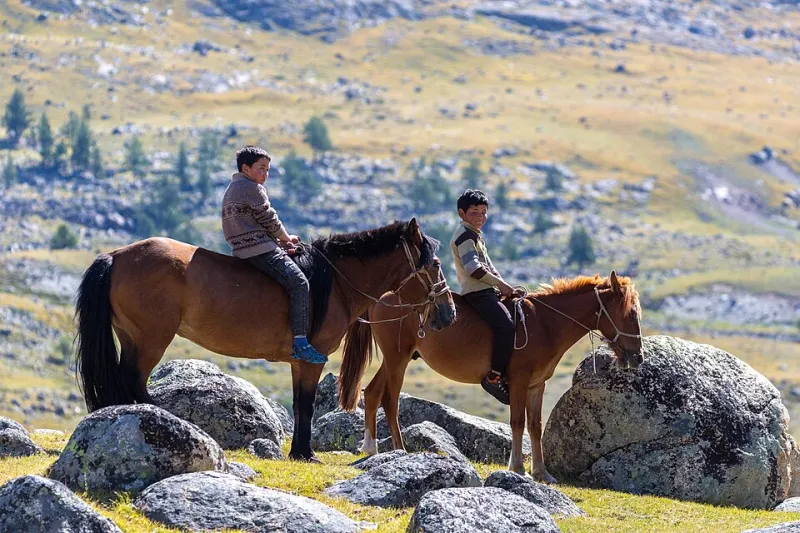
Photo: Bfreeproductions, CC BY-SA 4.0, via Wikimedia Commons
I want to tell you I was born in a saddle. I was not. I was born in suburban Ohio, and my entire horse education came from Clint Eastwood movies and one traumatic pony ride at the county fair when I was six. For four decades, horses were something I admired the way you admire fighter jets — beautiful, from a distance, definitely not something you touch.
Then, at forty-three, I flew to Mongolia and got on one anyway.
Why Adults Who Never Learned Should Start Here
Here's the thing nobody tells you: Mongolian horses are the most forgiving teachers on earth. These animals have carried herders across the steppe for thousands of years, and somewhere in that long history they seem to have collectively decided that patience with clumsy humans is part of the job. They're small — pony-sized by American standards — which does something wonderful to your fear center. A thousand-pound animal is intimidating. A Mongolian horse is more like a very opinionated golden retriever with hooves.
My guide, Batbayar, handed me the reins on day one and offered exactly one instruction: "Sit. Don't bounce too much." That was the whole curriculum. Compare that to a dude ranch in Montana, where you'll sign a liability waiver longer than a car lease, wear a helmet you don't trust, and walk in a conga line behind a wrangler who's already mentally checked out. In Mongolia, there are no waivers. There is also no conga line. There's just grass, horizon, and a horse that has zero interest in doing anything dramatic.
I've since watched a dozen first-timers mount up at the ger camps I visit, and the pattern holds: fifteen minutes of terror, an hour of awkwardness, and by afternoon they're trotting across open grassland with a grin they can't switch off.
What a Multi-Day Ride Actually Does to Your Body
Let's be honest about the pain, because the Instagram version omits it. Day one, your inner thighs file a formal complaint. Day two, you wake up and discover muscles you did not know you owned — the abductors, mostly, plus whatever's hiding behind your shoulder blades. Getting on and off the horse becomes an athletic event. Sitting down to dinner in the ger requires strategy.
By day three or four, something shifts. Your body stops fighting the rhythm and starts finding it. The posting trot — that gentle rise-and-sit the guides demonstrate effortlessly — stops being an intellectual puzzle and becomes muscle memory. This is the moment the trip changes character. You stop being a passenger and become a rider, and the steppe opens up in a way it simply can't from a Land Cruiser.
My advice, hard-won: bring chaps or tough pants, ibuprofen, and a healthy respect for the saddle. Mongolian saddles are wooden and beautiful and about as cushioned as a church pew. Nobody regrets bringing a seat pad.
Why the Steppe Beats Any Arena in America
The real argument for learning here isn't the horses. It's the terrain. An arena or a trail ride in the States gives you fences, trees, other people's dogs. The Mongolian steppe gives you nothing but room — an ocean of grass with a horizon so far away it feels like a rumor. When your horse spooks (mine did, once, at a marmot), there's space to sort it out. When you want to gallop, there's space for that too, and galloping across open steppe with a herder whooping beside you is an experience no Eastwood movie prepared me for.
There's also the cultural piece. Horses here aren't a hobby or a lifestyle brand. They're transport, wealth, weather forecast, and family. Kids who can barely walk are already riding, and the five-year-old who handed me my horse on the last morning rode circles around me all afternoon without ever once looking smug about it. Being surrounded by that — by people for whom this is ordinary — strips away the performance anxiety that makes learning to ride so fraught back home. Nobody at a ger camp cares that you're forty-three and clueless. They care that you're trying.
Coming Home Different
I flew back to the US with sore legs, a camera full of frames I'm still proud of, and a mild obsession. Within a year I'd found a local stable outside Bozeman and started taking actual lessons, and my instructor keeps saying I have "unusual confidence for a beginner." I don't tell her where it came from. It came from a small horse named Chinggis, a wooden saddle, and a country where nobody ever told me I was too old to start.
If you've been horse-curious your whole life and keep finding reasons to wait — the age, the fear, the embarrassment — Mongolia will quietly dismantle every one of them. The grass is endless, the horses are patient, and the only waiver you'll sign is the one you make with yourself.