Living on the Rim: The Man Who Chose the Volcano
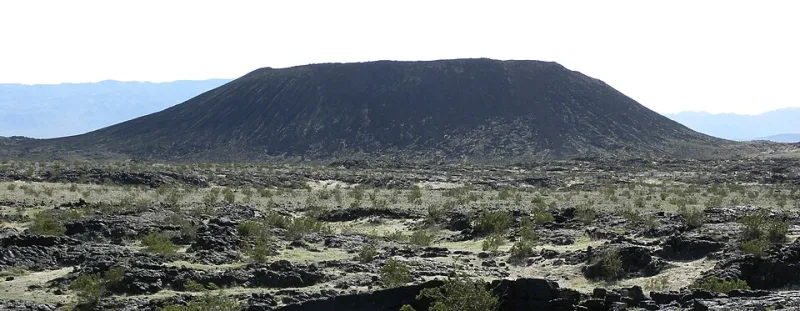
Photo: Wilson44691, Public domain, via Wikimedia Commons
The first thing Bat-Erdene asked me, after tea and the usual questions about America, was whether I wanted to see the crater up close. It wasn't a dare. It was an offer, the same way a neighbor in Montana might ask if you want to walk the fence line.
We climbed the lava field at dusk, our boots crunching over black rock that looked poured yesterday but cooled somewhere around eight thousand years ago. Bat-Erdene is sixty-one. He has herded horses and yaks in the shadow of Khorgo, an extinct volcano in central Mongolia's Khangai range, for most of his life. He does not think of it as dangerous ground. He thinks of it as home ground, the way you might think of the creek behind your grandfather's farm.
The Fence We Would Have Built
I kept trying to imagine this scene back in the States. A volcanic field, jagged basalt everywhere, a deep crater lake at the top, no railings, no signage, no park ranger. In Oregon or Utah, the whole area would be fenced, ticketed, and laminated with warnings. Somebody's cousin would have a lawyer on retainer before the lava even cooled.
That's not a criticism, exactly. Our hazard culture exists because we're a litigious, mobile society — millions of strangers passing through places they don't know. Mongolia inverts that equation. Nobody is passing through. The people who live here have read this land their whole lives, the way a sailor reads weather. There's no sign because there's no stranger. The knowledge lives in families, not on placards.
Bat-Erdene put it plainly: "The mountain is not doing anything. It's finished." The danger, in his view, is a problem for people who don't pay attention. He pays attention.
What a Dead Volcano Sounds Like
Here's what surprised me most. Khorgo isn't grim or ominous. It's gorgeous in a way that photographs struggle to hold — a green crater rim, pines pushing up through old lava flows, a lake called Terkhiin Tsagaan Nuur stretching out below like spilled milk. In summer the whole basin hums with marmots and horses. The volcano is less a wound than a landmark, something like a mountain that flared its nostrils once and settled back down.
At night, the place goes acoustically blank in the way I've written about before, but with a twist. Wind moving across open basalt makes a different sound than wind through grass — harder, more directional, almost like someone breathing near a microphone. I lay in my tent that night listening to it and thinking about how many Americans have never heard silence shaped by rock.
Shooting Notes: Night on Black Rock
For the photographers reading this, a few hard-won notes from the crater rim:
- Bring more light than you think. Basalt eats ambient glow. Even under a full moon, lava fields render nearly black. I used a low-powered headlamp bounced off my hand for foreground fill during long exposures.
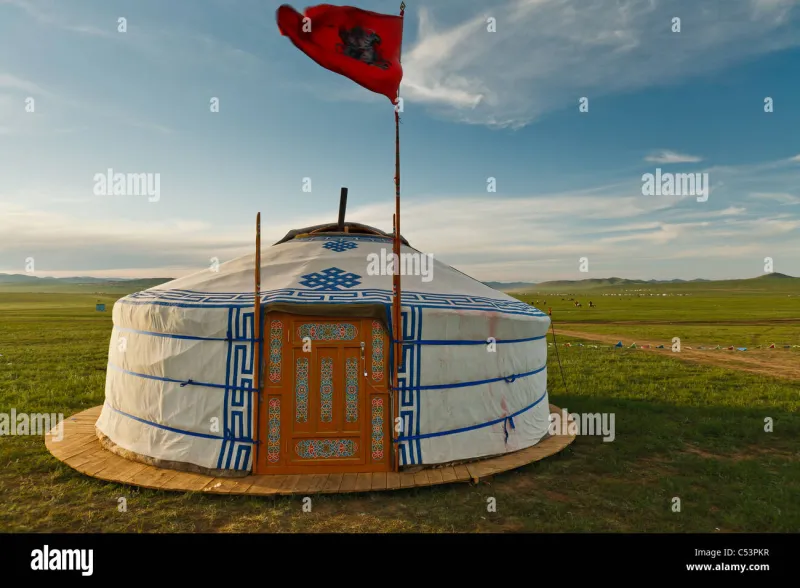
- Watch your whites. Bat-Erdene's ger, lit by a single solar bulb, blew out badly at 20 seconds. Drop your ISO and let the ger glow sit just above black.
- The Milky Way over a crater is the shot. It's worth the cold. Stack two exposures if you can — one for sky, one for the lava field.
- Pack a red light. You'll want it for navigating the rock fields at 2 a.m. without waking the whole ger camp, and without breaking an ankle that's eight hours from a hospital.
Why He Stays
I asked Bat-Erdene the question an American would ask: why not move somewhere easier? Somewhere with a clinic, a paved road, a hardware store?
He shrugged in the Mongolian way, palms out, and said the horses know this land. His grandfather pastured here. The grass on old lava soil is sweet, and the crater breaks the winter wind from the north. What I read as a hazard zone, he reads as a set of advantages — shelter, pasture, water, history. The volcano isn't the thing he lives despite. It's part of the reason he lives here at all.
Driving away the next morning, I passed no signs, no fences, no warnings. Just a man's horses grazing the flank of a sleeping mountain, and the quiet understanding between them that neither one was going anywhere.