There's No Menu, and That's the Whole Point: Eating Your Way Across the Steppe
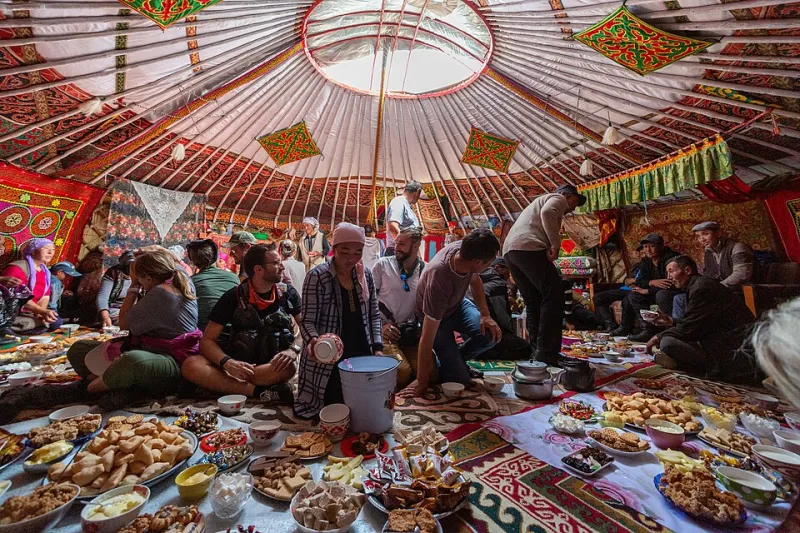
Photo: Bfreeproductions, CC BY-SA 4.0, via Wikimedia Commons
The first time a herding grandmother pressed a bowl of warm mare's milk into my hands, I did what any polite American would do: I smiled, said thank you, and quietly panicked. I'd read about airag. I knew it was lightly alcoholic, mildly sour, and absolutely not optional. I drank it. She watched. I drank more. And somewhere in that second bowl, the panic turned into something closer to gratitude.
That's the thing about eating in the Mongolian countryside that no packing list prepares you for: it's not really about the food. It's about what the food says.
Hospitality Isn't a Gesture Here — It's Infrastructure
In a country where neighbors can be fifty kilometers apart and winter can kill, the ger door is open. Not metaphorically. A traveler approaching a family's ger will be invited in, seated, and fed, usually within four minutes, whether or not they're hungry, whether or not it's a mealtime, whether or not anyone in the household speaks English.
For Americans raised on the choreography of "Can I get you anything?" — asked rhetorically, declined ritually — this takes recalibration. Out here, "Would you like tea?" is not a pleasantry. It's an offer, and the offer is the point. Saying no to the first bowl is saying no to the relationship.
So: say yes. Both hands on the bowl, always — it's the polite way to receive anything. Eat until you're genuinely full, then have a little more. Leaving food isn't rude the way it can feel back home; taking a small taste of everything is the real courtesy.
What You'll Actually Be Eating
Let's demystify it, because the unfamiliar is always scarier than the actual.
Suutei tsai — salty milk tea with a bit of butter and fat floating in it. It arrives constantly, all day. Think of it less as a beverage and more as a warm handshake. Don't ask for sugar. You'll adjust by day two.
Aaruul — dried milk curds, rock-hard, tangy, stored in bins by the door. They'll last through winter, which is the whole idea. Snack on them like jerky, because functionally, that's what they are.
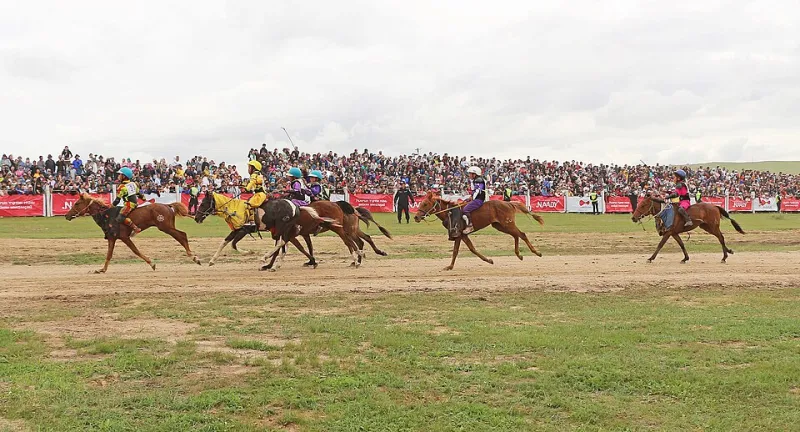
Buuz and khuushuur — dumplings and fried meat pastries, usually mutton, usually excellent. If you eat one thing and love it, it'll probably be these. Khuushuur fresh out of the oil at Naadam is a top-five street food experience on any continent.
Mutton, in all its forms — boiled with noodles (tsuivan), in broth, roasted for guests. It tastes like pasture, in the best sense. If you're squeamish, remember that a family is serving you the best of what they have, prepared with real skill. Nervousness about the meat is a you problem, and it's solvable with an open mind and a functioning appetite.
Airag — the fermented mare's milk from that first bowl. Slightly fizzy, slightly sour, slightly boozy. It's a summer drink, it's cultural bedrock, and refusing a offered bowl of it in July is like turning down sweet tea at a Georgia porch.
The No-Receipt Economy
Here's what gets me every trip: you cannot pay for these meals. I've tried. Slipping cash on the table after dinner in a ger is roughly as graceful as Venmo-requesting your grandmother for Thanksgiving.
Hospitality here isn't transactional, and trying to make it so misses something important. What you can do is reciprocate properly:
- Bring gifts from home, deliberately. Good coffee, quality chocolate, dried fruit and nuts, nice tea, headlamps, warm socks for the kids. Stock up in Ulaanbaatar before heading out; don't hand out things you bought at an American airport.
- Give gifts with your right hand (or both hands), not the left.
- Ask before photographing inside the ger, and share the images back when you can — print a photo and mail it, or keep contact info and follow through. Nobody believes you'll send the picture. Be the one who sends the picture.
- Return the invitation. If a family near a town invites you to stay, invite them to a meal in town when the occasion arises. The ledger, such as it is, stays open for years.
For the Nervous Eater: A Field Guide
If you're reading this with a knot in your stomach, some practical reassurance:
- Bring your own backup snacks — trail mix, protein bars — for the road, not the ger. Eat them in the van, discreetly.
- Pepto and Immodium live in the top pouch of my bag. So does hand sanitizer. Standard travel kit, no drama.
- Pace yourself with dairy. Mongolian dairy is a lot of dairy. Your gut will adapt faster than you think, but don't mainline airag on hour one.
- Watch what the family does. If they boil it, drink it. The tea is boiled; the water for tea is safe. Bottled water for everything else.
The Meal That Ruined Restaurants for Me
On my last long trip, we rolled into a family's ger at dusk, half-frozen after a day of shooting in the wind. A pot of mutton noodle soup appeared within minutes — hand-pulled noodles, broth from an animal they'd raised themselves, dried herbs from the hillside outside the door. There was no menu because there was no choice, and there was no choice because there didn't need to be.
I've eaten at places with three Michelin stars. I think about that soup more often.
So if you're headed out and the food scares you a little — good. Let it. Show up hungry, hold the bowl with both hands, and say yes to the first thing offered. The best meal of your trip won't come with a receipt. It'll come with a refill you didn't ask for, from a grandmother who's already decided you're staying for seconds.