The Overnight Train to Nowhere in Particular: A Darkroom on Rails
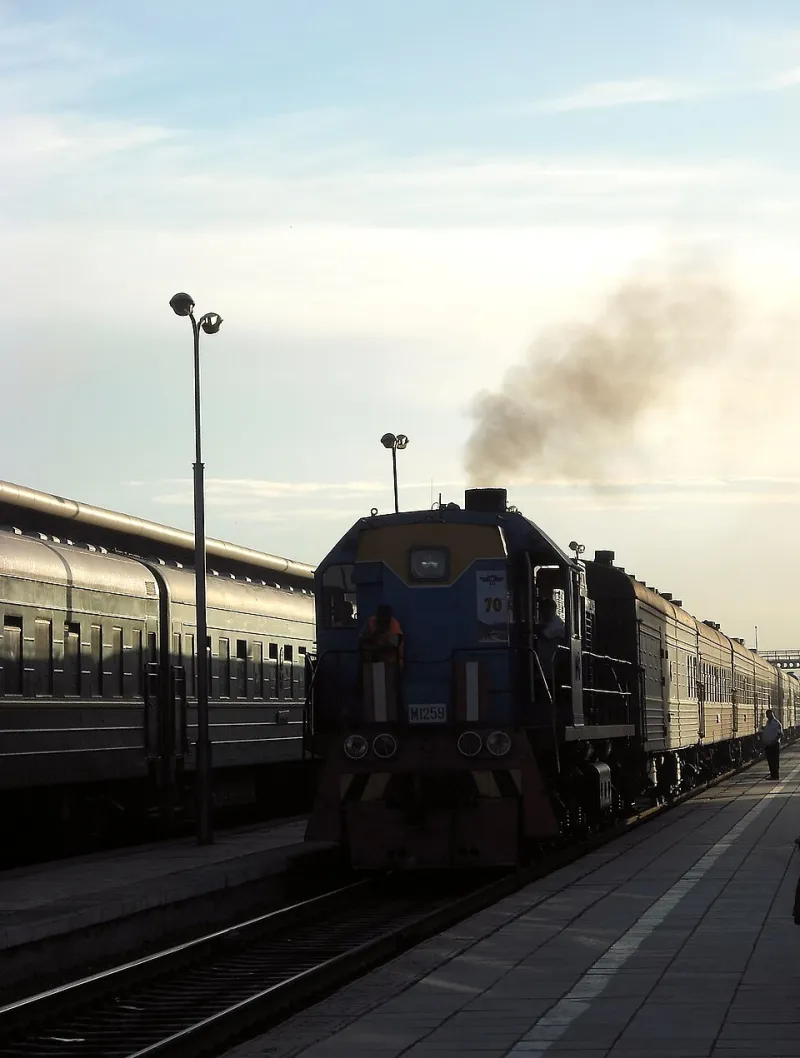
Photo: Adam Greig, CC BY-SA 2.0, via Wikimedia Commons
The train leaves in the evening, which is the first good thing about it. The second good thing is that nobody on board seems to think of the journey as a photo opportunity. They are going home, going to work, going to a funeral, going to buy parts for a truck. The sleeper car is a small, warm, rattling room with four berths and a table, and for one night it is also a darkroom.
I am not talking about the romance of rail travel. I am talking about light. The train gives you a narrow set of problems: a moving floor, a dirty window, a single overhead bulb, a reading lamp the color of old honey, and a landscape that refuses to hold still. If you like solving problems with a camera, it is a good place to be.
Boarding Is the First Frame
The platform is the overture. Families load boxes and bags. A man in a tracksuit carries a sack of something that smells like fermented mare's milk. The provodnik, the carriage attendant, checks tickets and hands out bedding. The light is fluorescent and unforgiving, and everyone looks a little tired. This is not the moment for a long lens. Use a wide angle and get close to the door, the steps, the pile of luggage. Let the frame be messy.
Once you are inside, the carriage has its own geography. Four berths, a small table, a window, a door that slides shut. The upper berths are dark caves. The lower berths are stages. The table is a still life waiting to happen: a tea glass, a spoon, a pack of cookies, a phone charging from a power bank. The first rule of train photography is to learn the space before you start lifting the camera. Where can you brace? Where does the light fall? What does the window reflect?
The Light You Actually Get
Forget the idea of a clean exposure. At night, the sleeper car is a mix of sources. The overhead bulb is harsh. The reading lamp is soft and orange. The window is a black mirror. The station lights, when they come, are blue and sudden. You will be shooting at ISO 3200 or 6400, and you will like it. A fast prime lens helps. So does a small cloth to wipe the window. So does patience.
Do not use flash. It will flatten the carriage, wake the strangers, and announce you as the person who does not understand the room. If you need more light, wait for a station. The doors open, the platform glows, and for thirty seconds the carriage is lit like a stage. That is your window. Use it.
Reflections Are the Story
The window is the best character on the train. At night it turns the carriage into a double exposure. You see the tea glass, and behind it, the reflection of the tea glass. You see a sleeping man's face, and beyond it, a string of lights from a town you will never visit. You see your own hands holding the camera, ghosted over the steppe.
This is where the cinematic frames live. Focus on the reflection, not the landscape. Let the outside blur. Let the inside be sharp. A window frame becomes a frame within a frame. If you are lucky, the train slows at a crossing and the reflection holds still for a second. That is the shot.
Tea, Strangers, and the Ethics of a Berth
A sleeper car is a shared bedroom. That changes the rules. Ask before you photograph someone's berth. Ask before you photograph a child. If someone is asleep, do not make a picture of their open mouth and call it humanity. A person asleep has not agreed to be your subject. Wait until they are awake, or find another frame.
Tea is a good way in. A glass of hot tea on the table, backlit by the reading lamp, is a still life that does not require anyone's permission. The same goes for the samovar, the bedding stack, the shoes under the berth, the curtain pulled half shut. These are the details that tell the story without turning a stranger into a prop.
If someone does agree, keep it short. One or two frames. Show them the screen. Thank them. Do not turn the conversation into an interview unless they want one. The train is not a studio. It is a place where people are trying to sleep.
The Discipline of a Moving Frame
The train is always moving, which means your shutter speed matters. A person sitting still in a berth can be sharp at 1/60 if you brace against the wall. A person walking down the corridor will blur. Sometimes the blur is the point. A hand reaching for a tea glass, a curtain swinging, a station sliding past the window — motion is part of the grammar. Do not fight it. Lean into it.
Use the window as a stabilizer. Press the lens hood against the glass, but not so hard that the vibration travels through the camera. Breathe out. Take one frame, then wait. The train will give you another chance.
Morning, and the Frames You Didn't Take
By morning, the light changes. The window turns from a mirror into a frame. The steppe is gray and gold. Someone is folding bedding. Someone is eating a boiled egg. The provodnik is sweeping the corridor. The night feels like a small secret.
You will not get every frame. The best one will happen while you are changing a battery, or while you are half asleep, or while you are trying to be polite and not point the camera at a stranger. That is fine. The train is not a checklist. It is a place to practice seeing in the dark, with a moving floor and a window that keeps giving you two worlds at once.