The Blank Map Is a Bad Photograph: Notes Against Mongolia's Last-Chance Clichés
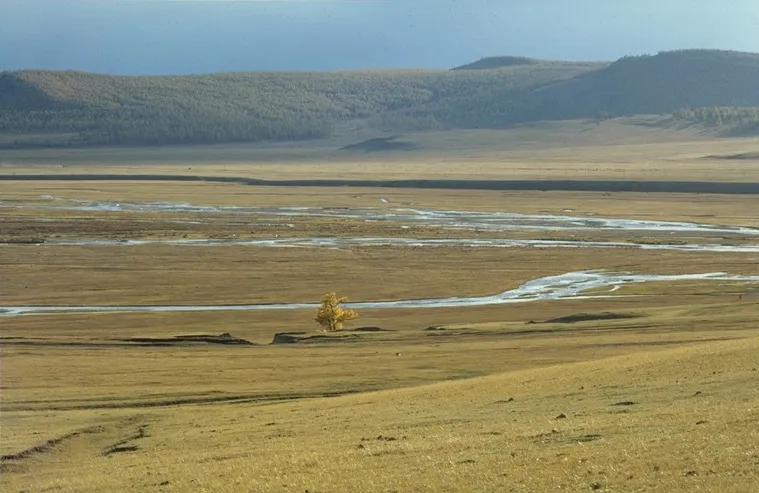
Photo: Damiano Luchetti, Public domain, via Wikimedia Commons
There is a photograph of Mongolia that seems to arrive before the photographer does. A lone rider on a ridge. A ger with a thread of smoke. A child in a felt coat, staring into the middle distance. A wide, empty grassland with no roads, no wires, no buildings, no evidence that anyone has ever had a dentist appointment. The caption usually says something like untouched, timeless, or last frontier.
I understand why the image sells. It is beautiful, and it is easy to read. But after enough years of seeing it, I have started to think of it as a bad photograph — not because the light is wrong, but because the story is. Mongolia is not a blank map. It is a country with a government, a mining economy, a cell network, a generation of kids who play video games in the capital, and herders who order supplies on their phones. The blank-map photograph is not a record of the place. It is a record of what the photographer wanted the place to be.
The Postcard That Won't Die
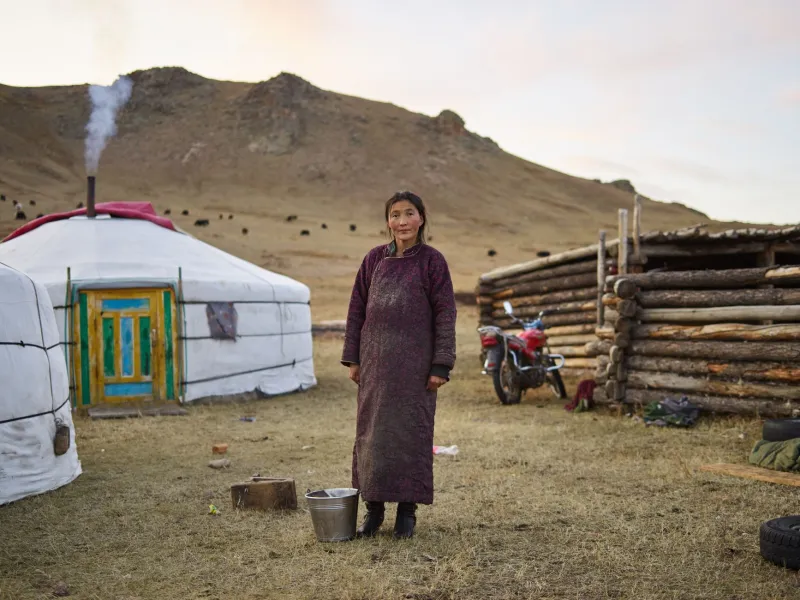
The clichés are specific. The solitary horseman, backlit, no face. The eagle hunter with a leather glove and a stare that could cut glass. The ger interior shot from a low angle, with a stove and a prayer wheel and no sign of the motorcycle parked outside. The endless steppe, cropped to remove the power line. The child with weathered cheeks and no name. The old woman who is always described as a grandmother, whether or not she is one.
None of these images are fake. The horseman exists. The eagle hunter exists. The ger with the stove exists. The problem is repetition and framing. When every photograph removes the same things — roads, schools, solar panels, satellite dishes, family arguments, boredom, a kid in a Barcelona jersey — the place starts to look like a set. And the people in it start to look like props.
Who the Cliché Flatters
For American travelers, the blank-map image is especially tempting. We grew up with our own frontier mythology: the wide-open West, the lone cowboy, the land before the fence. Mongolia offers a version of that story without the baggage of our own history. It is easy to project. The steppe becomes the last place where a man can be alone with his horse. The ger becomes the simple home we imagine we have lost. The herder becomes a symbol of freedom rather than a person with a mortgage, a winter forecast, and a kid who needs to get to school.
That projection flatters the visitor. It says: you have found the real world, and you are one of the few people who can appreciate it. But it also flattens the people you are photographing. They become scenery in someone else's story about modernity and escape.
What Untouched Erases
Mongolia is not untouched. It is a place where people have shaped the land for centuries through grazing, migration, and fire. It is also a place where the twentieth century arrived with force: collectivization, the Soviet era, the democratic transition in 1990, and now a mining boom that has changed the economy and the landscape. In 2026, a herder family may have a truck, a solar panel, a smartphone, and a winter camp that moves four times a year. None of that makes them less Mongolian. It makes them contemporary.
When a photograph crops out the power line, it is not just an aesthetic choice. It is a claim about what belongs in the frame. It says that the modern world is an intrusion, and that the real Mongolia is somewhere behind it. That is not honest. It is nostalgia with a wide-angle lens.
A More Honest Frame
A more honest photograph does not have to be a documentary about mining. It can still be cinematic. It can still be beautiful. But it should leave room for the actual place. Include the satellite dish next to the ger. Let the motorcycle be in the frame. Photograph the family watching a video on a phone. Make a portrait where the person is looking at you, not past you, and where their jacket is a jacket, not a costume.
Composition matters here. If you want to show scale, use a wide frame that includes the road and the sky. If you want to show intimacy, get close enough that the person's face is a face, not a symbol. If you want to show movement, photograph the truck, the horse, the bike, the airport bus. The cinematic version of Mongolia is not the one with the fewest objects in it. It is the one where the objects make sense together.
Consent Is Composition
None of this works without consent. If you photograph a person, ask. If you photograph a child, ask a parent. If you photograph a home, ask before you step inside. If someone says no, put the camera down. This is not a legal formality. It changes the photograph. A portrait made with permission has a different energy than a picture taken from across the yard. The person is present in it.
And caption your work. Names, places, context. Not just Mongolia, 2026. If the story is about a family moving camp, say so. If the story is about a mining town, say so. The caption is part of the photograph. It is where you tell the truth about what you saw.
Mongolia is not the last chance to see anything. It is a country that is changing, like every country, and the people in it are not waiting to be discovered. The best photographs I have made here are not the ones that make the place look empty. They are the ones that make it look inhabited.