Out of Diesel, Out of Signal, Out of Luck: How a Steppe Breakdown Became a Barter Story
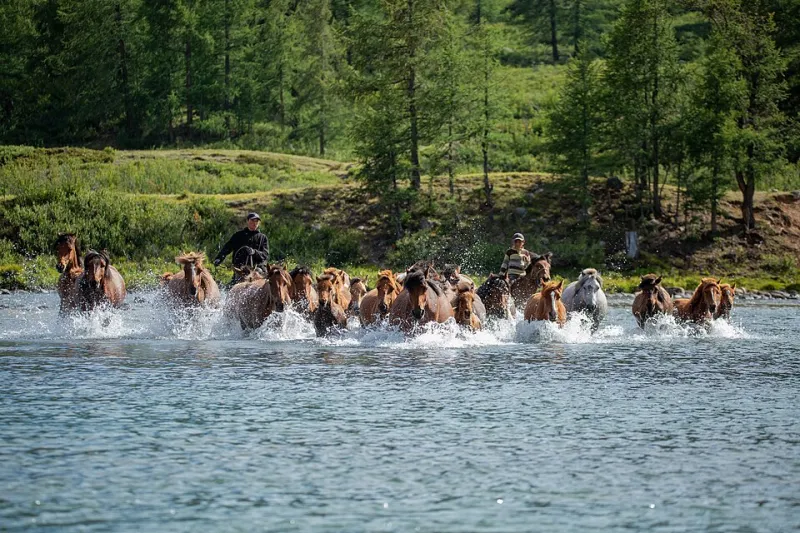
Photo: Bfreeproductions, CC BY-SA 4.0, via Wikimedia Commons
The Sound a Trip Makes When It Ends
If you've ever broken down on I-15 between Las Vegas and Salt Lake City, you know the drill. Hazard lights. Shoulder. Phone. Tow truck in forty minutes, give or take. The machine of American roadside assistance hums along underneath you, invisible until you need it, and then it simply appears.
Mongolia does not hum. Mongolia goes quiet.
We were three hours off any marked road when the van made a sound I can only describe as a mechanical sigh — a clunk, a shudder, and then nothing but the tick of a cooling engine and the wind coming across the grass in long, unbroken waves. No shoulder. No mile marker. No cell signal, obviously. The nearest town, if you could call it that, was a fuel depot we'd passed yesterday: a two-day round trip by truck.
My driver, Batbayar, got out, looked under the hood for about ninety seconds, and said the sentence that defines steppe travel: "We'll figure it out."
AAA Doesn't Cover the Grassland
Here's what an American brain does at this moment. It runs the math. Who do I call? What's the number? How long until help arrives? I stood there waiting for an answer to a question nobody had asked, because the question itself doesn't exist out there. There is no number. There is no help in the abstract. There are only the people within horseback distance of where you're standing.
In our case, that was a herding family whose ger we'd spotted that morning — a white dot on a brown hillside, maybe five kilometers back. Batbayar suggested we walk. My instinct said we should stay with the vehicle. My instinct was calibrated for a country with 42,000 tow companies. His was calibrated for this.
Tea First, Logistics Later
We arrived at the ger around four in the afternoon. Nergui, the family matriarch, met us outside, assessed two muddy foreigners and a broken-down van with a single glance, and held open the door.
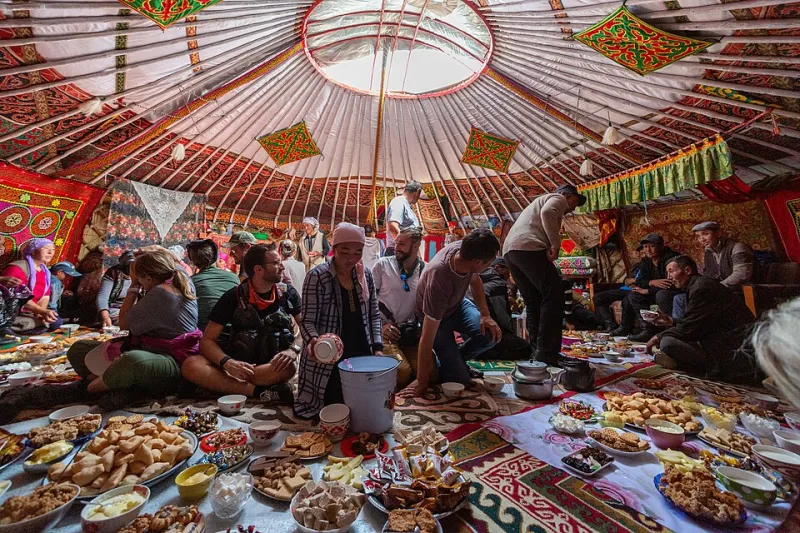
Nobody asked what we needed right away. That's the part that would unnerve a lot of US travelers — the sequence. First came salted milk tea, poured and re-poured until my bowl never emptied. Then fried dough and clotted cream. Then, an hour in, almost casually: "So. Your vehicle."
By nightfall the plan had assembled itself out of conversation, not logistics. A nephew knew a man with a diesel drum two valleys over. A neighbor would lend horses so someone could ride out and fetch it. The nephew's brother-in-law, it turned out, knew a mechanic in Lun who owed him a favor from a wedding. None of this was arranged through payment, exactly. It was arranged through a web of debts and courtesies older than any towing company in America — and we were now part of that web, whether we understood it or not.
The Economy Nobody Advertises
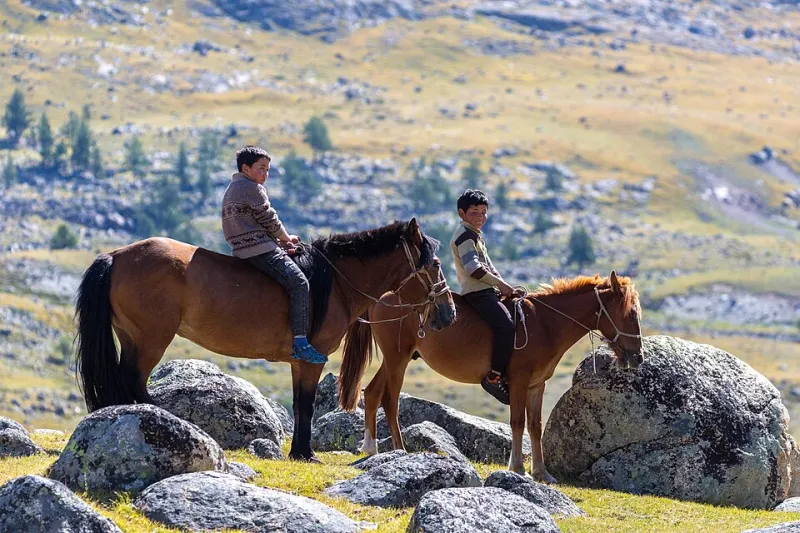
By the second day, a horse named for a famous wrestler carried a forty-liter drum of diesel across two streams, guided by a nineteen-year-old named Tugso who scrolled through her phone whenever we stopped, because even five kilometers from nowhere, Mongolians have better coverage than my Verizon plan in rural Montana.
I tried, clumsily, to pay everyone. Nergui refused. Tugso accepted a lens cloth. The diesel man accepted cash for the fuel and nothing for the transport, because the transport was a favor, and favors have their own accounting. Before we left, Batbayar quietly left a package of good tea and some cash under a cushion, and Nergui pretended not to see it, and that was the transaction. Everyone's dignity intact.
What terrified me on day one — the total absence of a system — had become, by day two, something almost luxurious. Nobody was on the clock. Nobody charged a service fee. The fix cost us two days, three liters of tea, and a relationship I still think about.
If You're Going to Try This Yourself
A practical sidebar, because romanticizing breakdowns is only fun in retrospect:
- Vehicle: Rent a Russian UAZ or a Land Cruiser with a driver. Do not self-drive your first trip. A driver is your translator, mechanic, and social passport.
- Fuel math: Carry two full jerry cans. Distances between fuel points routinely exceed 300 km, and "open" hours are theoretical.
- Comms: Buy a local SIM for coverage along main routes, but bring a satellite messenger (Garmin inReach is the standard) for everything else. Tell your family the silence is normal.
- Barter kit: Good tea, small practical gifts, cash in small denominations. You will use all of it.
- Time buffer: Whatever itinerary you've built, add 30%. Breakdowns aren't emergencies out here. They're weather.
What I Brought Home
I still pay for AAA. I'll never cancel it. But somewhere on the steppe, between the second bowl of tea and the sound of hooves coming over the hill with a diesel drum lashed to the saddle, something in my American wiring got rewired too. Help, I learned, doesn't have to be a phone number. Sometimes it's a horse, a family you met four hours ago, and the patience to let tea come before logistics.