Tea With Two Hands: The Small Mistakes That Taught Me How to Be a Guest
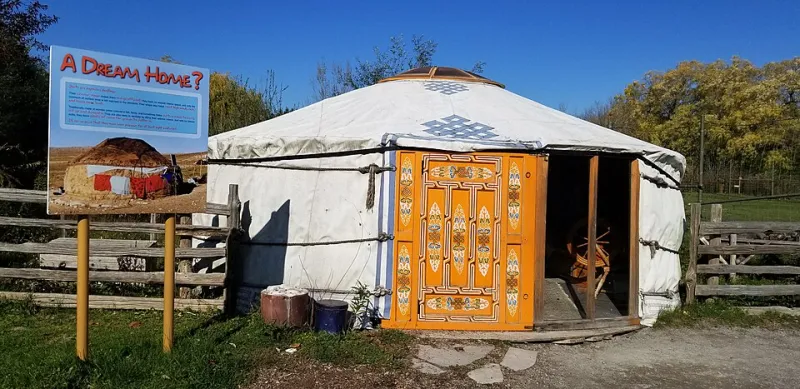
Photo: Silver Dovelet, CC BY-SA 4.0, via Wikimedia Commons
I've shot photographs on five continents, and I can tell you the exact moment I realized I knew nothing about being a guest.
It was 9 p.m. on my first night in western Mongolia, and I had just handed my host a wrapped gift with my left hand while stepping directly over the threshold of his ger, sitting in the wrong seat, and refusing a bowl of tea because I "wasn't thirsty."
Three strikes. Maybe four. And my host, a herder named Batbayar, just smiled and poured the tea anyway.
The Threshold Rule (Which I Learned by Violating It)
In America, a doorway is furniture. In Mongolia, it's sacred ground. You step on the threshold of a ger the way you'd step on someone's grandmother — it's just not done. The threshold is believed to hold the spirit of the household, and there's also a practical logic: those wooden beams are the structural weak point of the whole structure, and hundreds of boots a season will crack one.
So you step over, with your right foot first if you can manage it. I found this out the next morning, when Batbayar's teenage son demonstrated with the patience of someone who'd watched too many foreign documentaries to be surprised anymore.
Takeaway: Watch the feet of the person in front of you. In most cultures, the body knows the etiquette before the guidebook does.
Gifts: It's Not What You Give, It's How You Hand It
I'd done my homework — sort of. I brought gifts, good ones, from a shop in Ulaanbaatar. What I didn't know is that in Mongolian custom, you offer and receive things with your right hand, or better yet, both hands together, often with a slight bow of the head.
I slapped that wrapped package into Batbayar's hand like I was passing him a beer at a backyard cookout in Ohio. He took it graciously. I cringe about it to this day.
The two-handed offering isn't about formality. It's a physical acknowledgment: I see you, I respect you, this exchange means something. Once I started doing it — with tea bowls, with snuff bottles, with everything — I could feel the temperature of every interaction change.
You Don't Have to Want the Tea
Here's the thing about refusing suutei tsai, that salty milk tea that tastes like a warm hug from a stick of butter: you don't refuse it. The bowl gets offered, you take it with both hands, you drink some of it. That's not about thirst. It's about accepting the offer.
I told Batbayar I was fine, thanks, and watched a flicker of confusion cross his face. Later his wife refilled my bowl anyway. The third time, I drank it. It was fine. It was better than fine — it was the whole conversation happening in a bowl instead of words.
For Americans especially, this is a hard rewiring. We're raised on "no thank you" as politeness. In a ger, the polite thing is to receive.
The Seat Map Nobody Shows You
The ger has an invisible geography. The most honored spot is across from the door, facing the entrance — the khoimor. Guests sit there. The left side belongs to the men of the household, the right to the women, and the area near the door is for the youngest or the lowest-ranking.
I marched in and plopped down near the door like I was waiting for a table at a diner. Nobody corrected me. I only found out days later, from a translator, that I'd spent my first evening sitting in what was essentially the servant's seat.
The fix is easy: pause at the door, and your host will gesture you to your seat. Wait for the gesture. It costs you three seconds and buys you an enormous amount of goodwill.
Silence Is Not a Problem to Solve
This might be the biggest one, and it took me the longest to learn.
American social anxiety treats silence like a fire alarm. We fill it with weather talk, small talk, anything. That first night, I chattered nervously through dinner while Batbayar's family sat comfortably quiet, watching the fire, occasionally exchanging a few words.
By night three, I'd stopped performing. We sat in silence for long stretches — me sipping tea, Batbayar tending the stove, the wind doing its thing outside the felt walls. And those silences were the most comfortable I'd felt in months. Nobody was waiting for anyone to entertain anybody.
Back home, I now notice how rare that is. How we treat quiet like dead air on a radio broadcast instead of just... air.
Humility Is a Skill, Not a Feeling
Here's what I'd tell any American planning a homestay, in Mongolia or anywhere else: you will get things wrong. The goal isn't perfection — it's the visible willingness to be corrected.
Every time I fumbled and then adjusted, my hosts leaned in a little more. When I handed tea back with two hands on night four, Batbayar laughed and said something to his wife that made them both grin. My translator told me later it was, roughly: "The American is learning."
That's the whole job, honestly. Don't arrive as an expert. Arrive as a student who packed good gifts and knows when to shut up. The rest, the steppe will teach you — usually with tea in your hand.