The Ledger You Can't Print: What a Month on the Steppe Actually Costs
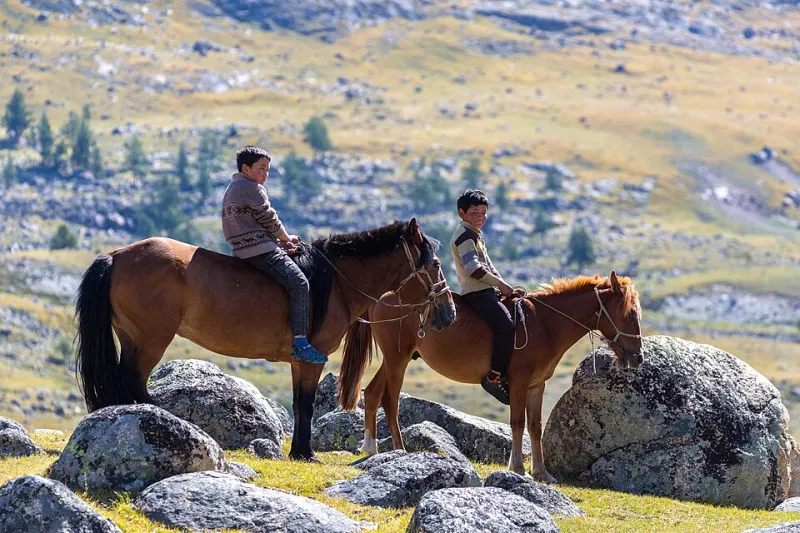
Photo: Bfreeproductions, CC BY-SA 4.0, via Wikimedia Commons
Before my first long trip into the countryside, I did what any American would do: I built a spreadsheet. Line items for fuel, food, lodging, transport. I even added a contingency column, because I'd read enough trip reports to know that things go sideways out there.
What I couldn't do was put a number on the thing that actually made the trip work. There's no cell for it in Excel.
Where the Money Actually Goes
Let's start with the boring part, because it's genuinely useful. Diesel is the spine of any Mongolian expedition budget. Distances are enormous — what looks like a short hop on the map can be a full day of driving, and fuel prices in the provincial towns run higher than in Ulaanbaatar. On my last crossing, fuel was the single biggest line item by a wide margin, bigger than food and lodging combined.
Horse rental is its own strange economy. You're not renting a horse the way you'd rent a car. You're typically paying a herder for the use of an animal, often with a guide or the owner coming along, and the rate is as much about the relationship as the service. A fair daily rate matters, but so does the understanding that you're being trusted with something alive and loved.
Then there's the food, which mostly isn't bought — it's given. Mutton, noodles, milk tea, the clotted cream that shows up in a bowl before you've finished saying hello. You contribute what you can to the household, and you leave something behind when you go. Which brings me to the part nobody quotes you.
The Gifts That Never Appear on Any Invoice
Here's what my spreadsheet missed entirely: you cannot arrive at a ger empty-handed. Not as a rule anyone states — as a fact of the culture. Tea, sugar, small practical gifts for families who host you, something for the kids. Over a month, this quietly becomes one of the larger expenses of the trip, and it's also the money that does the most work.
I buy these supplies in the city before heading out: bricks of tea, bags of sweets, batteries, small useful things. In the States, this would feel like bribery. Out there, it's just manners. It's how you say the visit mattered.
A Cash-Light Economy and What It Does to Your Brain
The strangest adjustment for me wasn't the lack of ATMs — I expected that. It was the lack of transactions. Whole days would pass where no money changed hands at all, and yet I was being fed, sheltered, and looked after.
An American brain starts twitching. We're trained to see every exchange as settled, receipted, closed. Out on the grass, most of what you receive isn't a purchase. It's hospitality, and hospitality runs on a different ledger — one where what you owe is attention, patience, and eventually reciprocity. You sit when you're invited to sit. You stay for the third round of tea even when the light is perfect and the photographer in you is dying to leave. That's a cost too, and it's paid in something scarcer than dollars.
My Actual Numbers, Roughly
I won't pretend these are gospel — prices move, and your route changes everything — but for a rough month-long trip with a driver and interpreter, fuel and the driver's fee dominated the budget. Food in towns was cheap by US standards; a filling meal in a provincial canteen costs less than a fast-food combo back home. Guesthouse nights, where you can find them, are modest. The gift budget I now plan as seriously as fuel, because running out of both strands you equally far from anywhere.
And the horse? The daily rate was reasonable. The real price was the two days it took to earn the herder's trust before he'd let me near his best animal.
The Only Line Item That Matters
I've come to think of the whole thing this way: Mongolia has a dollar menu, but it's not printed anywhere. The dollar prices are low. The real prices — the patience, the hours in a ger when you'd rather be shooting, the gifts you carry four hundred kilometers in hopes the right family asks for them — those are the ones that determine whether a trip is good.
Americans ask me all the time what a trip like this costs. I usually give them the fuel figure, because it's concrete and it's honest. Then I tell them the rest: bring cash, bring gifts, and bring more time than you think you need. Out there, time isn't money. It's the only currency anyone's counting.