Three Weeks of Silence My Phone Didn't Choose: What the Steppe Taught Me About Being Unreachable
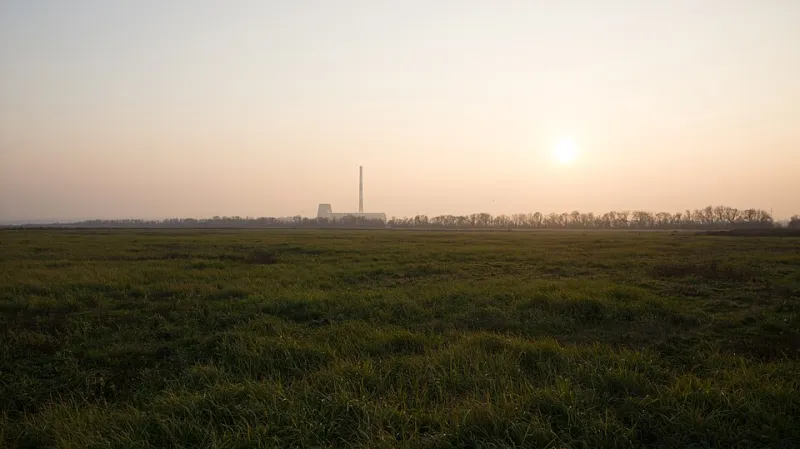
Photo: Vyacheslav Argenberg, CC BY 4.0, via Wikimedia Commons
The Last Email
I sent it from a hotel lobby in Ulaanbaatar, hunched over the sketchy wifi at 6 a.m. local time, which was roughly 4 p.m. the previous day in Montana, where most of my clients live. It said something like: Heading into the countryside for three weeks. Likely no signal. Will respond when I'm back.
Then I hit send, packed my camera gear into a Land Cruiser, and drove west until the bars on my phone disappeared for good.
What I didn't expect was how much that little email would rattle me. Not at first. But over the next twenty-one days, I went through something I can only describe as withdrawal — and then something better on the other side of it.
The Anxiety Curve
Here's roughly how it played out, and I suspect it would play out the same for most Americans:
Days 1–3: Panic disguised as productivity. I checked my phone constantly, out of habit, staring at the empty signal indicator like it might change if I looked hard enough. I drafted emails I couldn't send. I worried about deadlines, a tax document, a friend going through a divorce.
Days 4–7: The bargaining phase. I found myself calculating where the nearest soum center might be, whether the herding family we were staying with had a relative in town who could check a message. I was, in short, looking for a fix.
Days 8–14: Something cracked. Not in a bad way. The phantom phone-checking stopped. I started noticing things like the way morning light came through the felt of the ger, the specific sound of hooves at different gaits. My sleep changed. My dreams changed.
Days 15–21: I stopped thinking about it entirely. Which, if you've ever tried a juice cleanse or a meditation app, you'll recognize as the miracle moment — except nobody sold it to me for $400 a weekend.
We Pay Good Money to Be Hard to Reach
Back home, disconnection is a luxury product. Silent retreats in Big Sur. Off-grid cabins in the Adirondacks with "no wifi" listed as a selling point and a premium price to match. There's a whole industry built on selling Americans the thing I got for free — or rather, for the cost of a diesel-fueled drive into a landscape the size of Texas.
But there's a difference, and it took me a while to name it. A paid detox is a performance of disconnection. You chose it, you scheduled it, you told people about it. There's a back door, and everyone knows it. Forced disconnection, the kind you get on the Mongolian steppe, has no back door. Nobody is impressed by your sacrifice. The herders I stayed with weren't "unplugging." They were just living, and the signal happened to be 150 kilometers away.
That distinction matters more than I expected.
Reachable Means Responsible, Right?
Here's the assumption I didn't know I was carrying until it got stripped away: that being reachable is the same thing as being responsible. That a good American professional answers within hours, apologizes for delays, and treats their inbox like a smoke detector that might go off at any moment.
The steppe disagreed. The family I stayed with made decisions the way people have made them for centuries — by looking at the sky, the animals, the season. Nobody needed to be informed. Nobody was waiting on a reply. Work happened at the speed of weather, not bandwidth.
And here's the uncomfortable part: nothing fell apart. Not one client, not one friendship, not one emergency. The tax document was still there when I got back. The friend was fine. The world, it turns out, is more forgiving of silence than we've been led to believe.
What I'd Tell My Freelance Self
If you're an American freelancer, gig worker, or anyone whose livelihood feels tethered to the little green dot on Slack, I'm not going to tell you to book a flight to Ulaanbaatar. Though honestly? You could do worse.
What I'd say instead is this: the anxiety you feel about being unreachable isn't a fact. It's a habit with a timeline. Mine lasted about a week. Yours might last three days or ten. But it ends, and what's on the other side isn't laziness or irresponsibility — it's attention. The kind of attention that makes better photographs, better writing, and frankly, better emails when you finally do send them.
I've been home for a few months now. My phone is loud again. But I've kept one rule from the steppe: one full day a week where the phone lives in a drawer, on purpose. It's not the same as three weeks of nothing. It's not even close.
But it's a start — and it's the only souvenir from Mongolia that didn't cost me baggage fees.