Turn It Up to Zero: What the Steppe Sounds Like When Nothing Is Happening
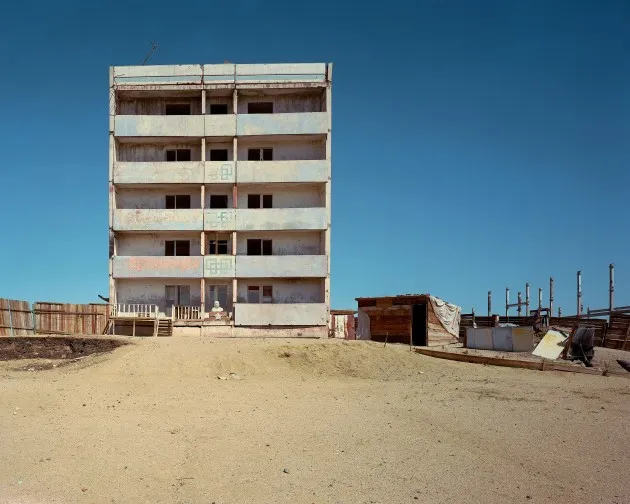
Photo: StaPerRa, CC BY-SA 3.0, via Wikimedia Commons
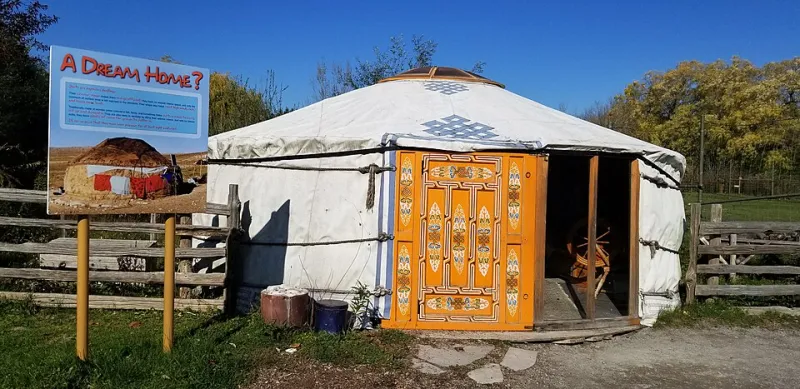
The first recording I made in Mongolia was a mistake. I'd clipped a lav mic to my jacket before dawn outside a ger in the middle grasslands, hit record on my handheld recorder, and forgot about it for twenty minutes while I helped haul water. Later, listening back on headphones, I expected garbage — wind rumble, cloth rustle, me breathing like a dial-up modem.
Instead I heard the steppe.
The Background Hum You Didn't Know Was There
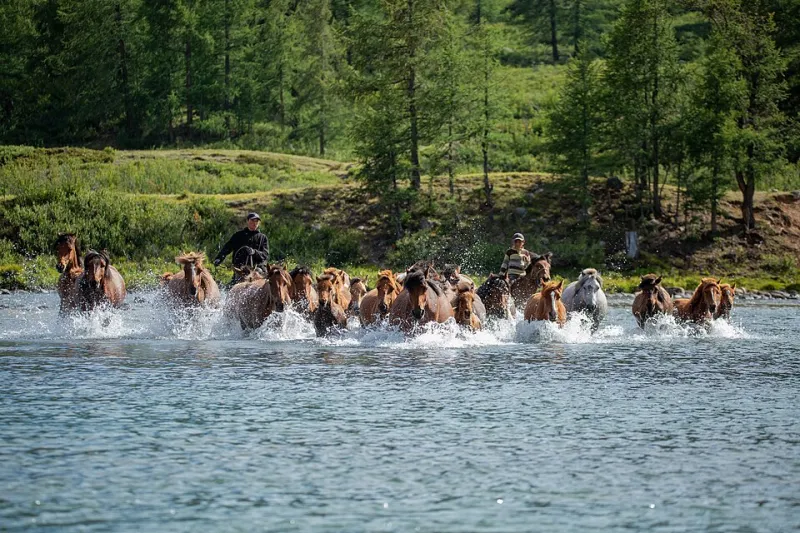
Here's the thing nobody tells you about silence: it isn't silent. On the grassland, three hundred kilometers from the nearest city and further still from a highway, there is a floor to the sound — a low, shifting wash of wind moving through grass for hundreds of kilometers in every direction. It doesn't rise and fall so much as breathe. Once your ears recalibrate to it, you start picking out the layers: a horse shifting weight two valleys over. Sheep, somewhere, doing the thing sheep do. The fabric of the ger itself ticking as the temperature changes.
Compare that to an average morning back in the States. Before my feet hit the floor I've usually absorbed a phone notification, a refrigerator compressor, the neighbor's leaf blower if it's Tuesday, and the low-grade psychic hum of knowing forty emails are stacking up. American life doesn't have a volume knob so much as a volume floor, and it keeps ratcheting upward. We've engineered a country where true quiet is a product you have to buy — noise-canceling headphones, cabin rentals, meditation apps that simulate rain.
Mongolia hands it to you free. And honestly, it's disorienting. The first night in a ger away from any settlement, I lay awake bothered by a sound I couldn't identify. It took me a full day to figure out the problem: there was nothing to identify. No traffic. No HVAC. My brain kept searching for the signal and finding grass.
Field Recording for People Who Also Want to Drink Salted Milk Tea
If this sounds like your kind of trip and you're thinking about bringing a recorder, a few hard-won notes.
Wind is the enemy, and the steppe is made of wind. A fuzzy windscreen is non-negotiable, and honestly a second, furrier one on top of that. I run a small handheld recorder with a mid-side mic for ambience and a pair of omnidirectional gophers for stereo spreads. Total setup fits in a daypack, which matters, because everything you own on the steppe gets strapped to a motorcycle at some point.
Dust gets everywhere. Tape your memory card doors. Bring more batteries than you think, and a power bank — ger families often run solar now, and most are genuinely happy to charge gear for you, but don't assume.
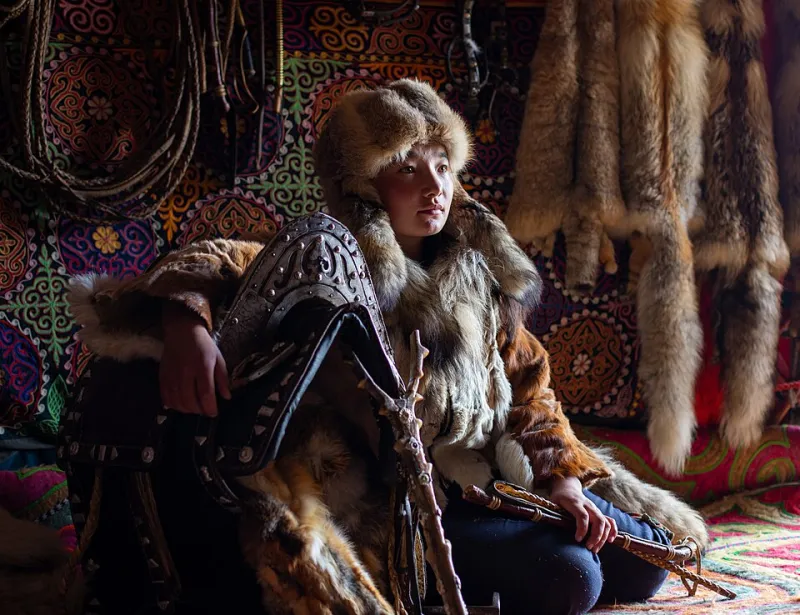
The best sounds require the worst logistics. Horse hooves at dawn. The crack of an airag being churned. A herder calling animals in from grazing with a sound I still can't transcribe. All of these happen on the family's schedule, not yours, which means recording well means being present, un-caffeinated, and useful at hours American me would normally file under 'not applicable.'
The Ethics of Hitting Record
A word about ceremonies and private moments. I've sat through throat singing sessions, a shaman's invoking, and countless family conversations I understood maybe a tenth of. The rule I've landed on: ask before, not after, and ask the person whose space it is — usually the eldest — not whoever happens to be nearest. A gesture toward the recorder and a raised eyebrow works across every language barrier I've hit. And if the answer is no, put it away without a sigh. Some of my favorite memories from Mongolia are ones I have zero audio for, precisely because I was too busy participating to document.
There's also a subtler point. Recording changes what you listen for. Spend a week hunting for 'good sound' and you'll start hearing the steppe like an engineer — evaluating hooves for their transient response, mentally EQing the wind. That's a real pleasure, but don't let it eat the actual trip. Some evenings I'd set up the mics, let them run, and then walk away and just sit. The recording was fine. The sitting was better.
Coming Home to the Noise
The strangest part of these trips is re-entry. Landing in Seattle, or Denver, or wherever the connecting flight dumps you, the wall of sound is physical. Gate announcements, boarding groups, someone's video playing at full volume three seats down. I used to think my post-trip grumpiness was jet lag. It's not. It's volume lag — my ears had spent three weeks learning a quieter world, and nobody at baggage claim got the memo.
Since that first trip, I've kept a recording of pure steppe wind on my phone. Sometimes, in a traffic jam or a crowded airport, I put in one earbud and play it. It doesn't fix anything. But it reminds me that quiet isn't the absence of the world — it's the world, at full bandwidth, with nothing added.
Your eyes will take home a thousand photos of Mongolia. Your ears will take home something you can't frame. Bring a recorder anyway. But mostly, bring ears that are willing to relearn their job.