Six Hours in an Open Trailer, One Soaked Camera Bag: The Gear Review I Couldn't Have Written at Home
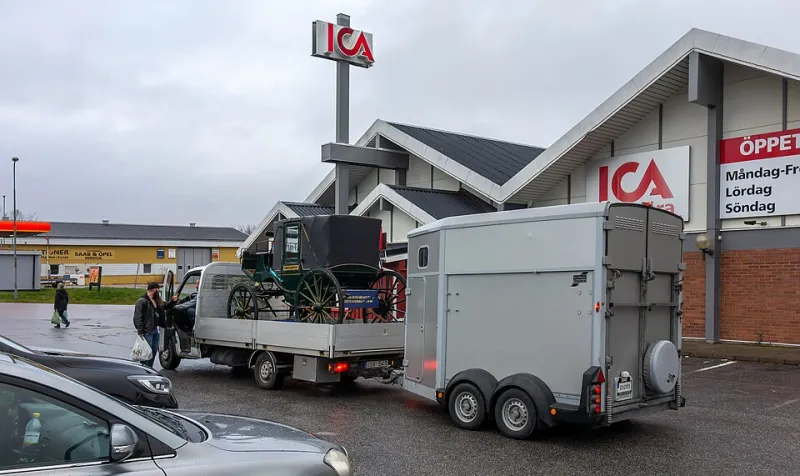
Photo: W.carter, CC0, via Wikimedia Commons
The Review Nobody Planned
Every gear reviewer in America has a shelf shot. The camera on a clean desk, the bag unzipped at a flattering angle, the word weather-sealed dropped in like a promise. I've written those reviews. I'm not proud.
Then last summer, outside of Moron, I watched a thunderstorm roll across the grass like a moving wall, and I learned what weather-sealed actually means. Not from a spec sheet. From the back of an open horse trailer doing forty kilometers an hour on a track that wasn't a road, with rain coming in sideways and my entire kit bouncing around in a duffel between two saddles and a sack of salt blocks.
How the Gear Ended Up There in the First Place
The plan was simple: our 4x4 had a cracked axle, a local herder offered to haul our gear to the next sum while we waited on repairs, and the only vehicle available was a horse trailer — open-topped, no tarp, towed by a Russian UAZ that had opinions of its own.
The alternative was leaving $15,000 of camera equipment unattended in a ger for two days. So: trailer.
I wrapped the bodies in dry bags. The lenses went into a padded case that had survived Utah slot canyons. The tripod, famously indestructible, rode loose. Everything else — filters, batteries, the drone I'd promised myself I'd stop bringing — went into the duffel and hoped.
What the Storm Did
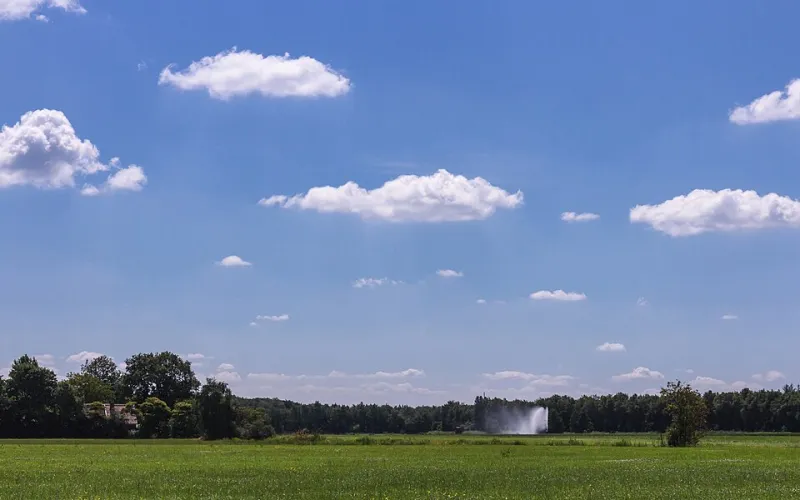
Mongolian summer storms don't build. They arrive. One minute we're crossing a green roll of grass under blue sky; the next, the horizon goes gray-brown with rain and dust mixed together, and the driver just points forward and keeps going, because there is nowhere to stop.
Six hours. Rain, then hail, then rain again. Water pooled in the trailer bed and sloshed back and forth with every turn. My "rugged" padded case — the one rated for submersion, allegedly — took on water through a zipper seam I'd never noticed because I'd never needed to.
The dry bags saved the bodies. The case failed the lenses. The tripod, as always, didn't care.
The Failures Were Instructive
Here's what surprised me: the gear that failed wasn't the cheap stuff. It was the expensive, well-reviewed, properly rated stuff. The failure wasn't in the materials — it was in the details nobody photographs for the review. A zipper pull that created a water channel. A seam taped on the inside where the tape had aged. A drain grommet that worked fine for vertical rain but not for six hours of horizontal, wind-driven steppe water.
Meanwhile, the $12 dry bags from a marine supply store, the kind bass fishermen in Minnesota have used for decades, performed flawlessly. Because they were designed by people who understood that water doesn't fall politely from above.
What This Means for Your Next Road Trip
If you're shooting the American West — and a lot of you are, given the way Utah and Montana permits have been selling out — you're facing versions of this exact test. Monsoon season in the Southwest doesn't fall vertically either. Neither does coastal fog in the Pacific Northwest, or lake-effect spray in Michigan.
A few things I'd tell my younger self:
Test the failure mode, not the feature. Any bag can survive a drizzle. Put it in your truck bed, drive through a car wash with the sprayers on, and see what happens. That's closer to reality than anything on a spec sheet.
Trust cheap redundancies over expensive ratings. A dry bag inside your expensive bag costs almost nothing and has no zippers to fail. This is not a new idea. Whitewater rafters figured it out generations ago.
Rotate your kit honestly. The tape on my case's seam had degraded because the bag was eight years old and I'd never inspected it. Gear ages. Ratings apply to gear in year one.
The tripod rule holds everywhere. Buy the boring, ugly, overbuilt one.
The Part That Isn't About Gear
When we finally rolled into the sum, soaked and laughing, the herder who'd lent us the trailer didn't ask about the equipment. He asked if we'd eaten. His wife made soup. My lenses were fogged and one filter had cracked, and honestly, sitting in that warm ger, it was hard to care.
That's the real review criteria, I think. Not did the gear survive but did the gear let you stay present for the part that mattered. In Mongolia, the part that mattered was six hours of the most violent, beautiful sky I've ever seen — and for most of it, I wasn't shooting at all. I was just holding on.
The gear that's worth carrying is the gear you can forget about. Everything else is just a shelf shot waiting to fail.