Some Nights Belong to No Camera: A Case for Putting the Lens Down
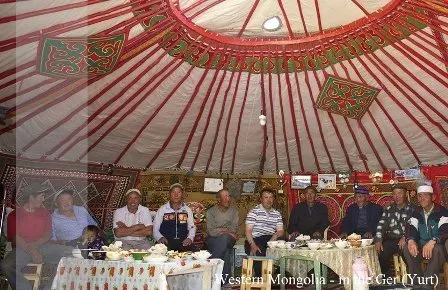
Photo: Kazakh family celebration inside traditional ger Mongolia evening, via www.amicusmongolia.com
I got invited to a Kazakh wedding in the far west of Mongolia almost by accident. A fuel stop, a conversation through a translator, a laugh — and suddenly I was being pulled by the sleeve into a ger where three generations of a family were preparing to celebrate their daughter's marriage.
I had two cameras on me. I never took either one out of the bag.
This is a piece about that decision, and about the other nights like it — the throat singing that floated out of a neighboring ger at 2 a.m., the airag I was handed before I'd even sat down, the songs I couldn't understand and didn't need to. The nights I didn't photograph.
The Instinct to Document, and When It Goes Wrong
Look, I photograph for a living. My whole career is built on the belief that images matter, that a frame of an eagle hunter at dawn in the Altai can make someone in Ohio feel something real about a place they'll never see. I'm not here to tell you photography is the problem.
But somewhere in the last decade, the camera became a permission slip. Point it at anything, and the act of pointing becomes its own justification. I've watched travelers at Naadam treat wrestlers like zoo animals. I've seen tourists walk into strangers' gers, uninvited, phones first. And I've felt that same impulse in myself — that small, greedy voice saying this is content, don't waste it.
The wedding was the moment that voice got quieter than something else. Because the family wasn't performing for me. They were just living, at full volume, and I was a guest.
What Happens When You Don't Shoot
Here's what I noticed, sitting in that ger with my cameras zipped away: I remembered more.
I remember the dombra player's fingers, the way the bride's mother kept refilling my bowl of airag — fermented mare's milk, an acquired taste I acquired out of pure politeness and then, genuinely, out of love. I remember the groom's uncle singing a long song that made an old woman cry, and how nobody found that strange or embarrassing. I remember the heat of the stove, the smell of mutton and milk tea, the feeling of being the only person in the room who cared about anything other than the room.
Would I have gotten good frames that night? Almost certainly. Would those frames have cost me the night itself? I think so. Presence is a finite resource, and the viewfinder is where it goes to die.
A Working Photographer's Rule of Thumb
I've landed on a simple test I use now, and I'd offer it to any American traveler headed somewhere that isn't a theme park:
Would I take this photo if the subject were my own family, in my own kitchen?
If the answer is yes — the light is beautiful and the moment is honest and the person would smile seeing it — take it, and then share it with respect. If the answer is well, it's exotic, or my followers would love this, put the camera down. That photo isn't about them. It's about you, and it's not worth much of anything.
The corollary: some rooms are simply not for you. A funeral, a prayer, a private celebration you wandered into — no frame is worth your welcome there.
The Photos I Didn't Take Made Me a Better Photographer
Strangely, the nights I've kept my lens capped have improved the work I do when the camera comes out. Sitting in that ger, not shooting, I learned how the family moved, what they valued, where the humor lived. The next morning, when I asked — asked, not assumed — to make a portrait of the grandmother, she said yes immediately. She knew me. I'd been a guest, not a collector.
That's the whole secret, honestly. Trust is the most important piece of gear I own, and it can't be bought. It's earned in the hours you spend with the camera down.
There's a version of that wedding that exists on a memory card somewhere in an alternate universe. It has maybe forty great frames. In this version, I have no pictures at all — just a night of throat singing and airag and songs I didn't understand, held entirely in my head.
I wouldn't trade it for the portfolio.